Catalogues
Five Hundred Pages by 1897
The Sears, Roebuck catalogue from its 1888 debut to the 'Big Book' that reached 500 pages by 1897 — how the page count became a competitive claim and what each added category meant for the rural buyer.
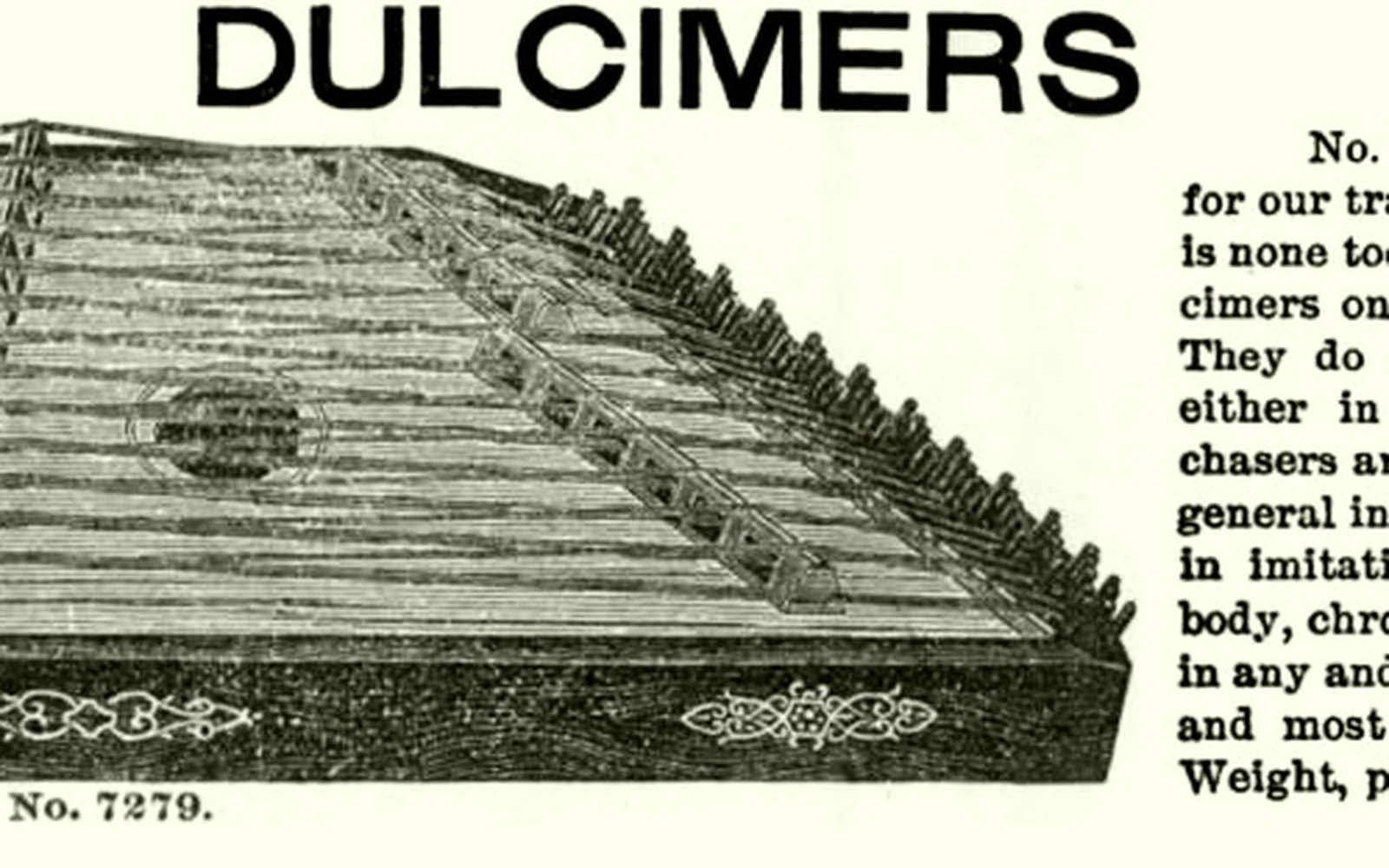
Two editions a year and roughly 500 pages by 1897 — the page count was itself the competitive claim.Photo: Searsdulcimer · Wikimedia Commons
From Watch Circular to General Store on Paper
When Richard Warren Sears printed his first watch circular in 1888, it ran to a few sheets and addressed a single type of buyer: the rural resident who wanted a timepiece but had no jeweller within reasonable distance. The proposition was blunt and the inventory was narrow. Within nine years that watch circular had grown into a bound catalogue of roughly five hundred pages — a document so physically substantial that postal carriers sometimes strained under the weight of a single delivery satchel. The growth was not accidental. Each added section represented a commercial calculation about what a farm household needed, what a competitor could not yet supply, and what the Rural Free Delivery programme, launched by the United States Post Office in 1896, could now place directly on a farmhouse porch rather than requiring a journey to the nearest post office.
Sears had incorporated as Sears, Roebuck and Company in 1893, by which point Alvah Curtis Roebuck — a watchmaker recruited to repair returned goods and eventually to help draft catalogue copy — was already helping to manage a catalogue that had expanded well beyond jewellery. The Chicago headquarters processed orders arriving by post from across the rural Midwest and South, regions underserved by the department-store boom that was simultaneously reshaping urban retail. In those regions, the catalogue was not a supplement to ordinary shopping; it was the ordinary shopping.
The Competitive Logic of the Page Count
Aaron Montgomery Ward had preceded Sears into the mail-order catalogue trade by more than fifteen years, printing a single-page sheet in 1872 and expanding steadily through the 1870s and 1880s. By the early 1890s Montgomery Ward was issuing catalogues of several hundred pages, and the page count itself had become a tacit competitive claim — a signal to the rural buyer that the company carried everything a general store might carry, and then some. Sears understood this logic and pursued it with particular aggression. To add a category of goods was to announce competence; to add fifty pages was to announce scale.
A century of retail, filed by year.
Photo: Mathias Reding / Pexels
The 1891 Sears catalogue had already moved beyond watches and jewellery into silverware, firearms, and sewing machines. Each extension followed a recognisable pattern: identify a category in which rural buyers paid inflated prices at local merchants, source goods in sufficient volume to undercut those prices, and print the offer with enough copy to explain, reassure, and close. Claude Hopkins, whose copywriting career would later produce the canonical text Scientific Advertising, was not yet at Sears in this period, but the underlying copywriting strategy — long, reason-giving prose addressed to a reader who was also a purchaser — was already visible in the Sears catalogue's page layouts. Prices appeared in large type; the reasons for trusting those prices appeared in small but dense paragraphs beneath.
By 1893 the catalogue had incorporated clothing, including ready-made suits for men and dress goods by the yard. The addition was significant not merely as a revenue category but as a logistical claim: Sears was asserting that fabric, sized to a customer's written measurements, could be reliably shipped and reliably fit. The risk was managed partly through explicit guarantees and partly through the instalment plan credit arrangements that Joseph Spiegel's operation was simultaneously developing as a structural offering — though Sears in this period emphasised cash prices and discounts rather than the instalment model Spiegel built into the architecture of its business.

Ward's 1872 list ran to a single page; its argument was that a printed price needs no shopkeeper standing behind it.
Photo: Antoni Shkraba / Pexels
What Five Hundred Pages Contained
The 1897 catalogue — issued in the spring and again in a fall edition — is the volume most commonly cited when historians describe the "Big Book" threshold. Its roughly five hundred pages distributed across a range that would have looked familiar to anyone who had recently browsed a department store's floor plan, then added several departments no urban store thought worth maintaining. Hardware was present: tools, nails, wire fencing, wagon parts. Agricultural implements included harnesses, churns, and cream separators. Drugs and patent medicines occupied a section that reflected both genuine rural demand and the loose regulatory environment that preceded the Pure Food and Drug Act of 1906. Musical instruments — organs, banjos, guitars — appeared in a section that acknowledged the cultural as well as material needs of the household.
Sears offered kit houses later, beginning in 1908, but the 1897 catalogue's structural ambition was already present in miniature: it was selling the idea that everything a household consumed could arrive through a single commercial relationship. The variety of goods across those five hundred pages was not randomly accumulated. Robert Kestnbaum's later formalisation of RFM scoring — ranking customers by recency, frequency, and monetary value of past purchases — was still decades away as a named practice, but Sears was already thinking in closely related terms. A customer who ordered watches and then clothing and then a sewing machine was a relationship, not a transaction. The catalogue was engineered to sustain and deepen that relationship by ensuring that the next category a buyer needed was already present in the book already in the house.
The physical book itself was a marketing instrument. It arrived, it stayed. Because Parcel Post did not yet exist in 1897 — that statute came in 1913 — the catalogue itself was mailed under printed-matter rates while the goods it sold moved by express carrier or freight. This separation shaped the category mix: goods that were small, light, or high enough in value to justify express shipping appeared first and dominated the early editions. Heavier, bulkier goods — wire fencing, wagon parts, larger agricultural implements — were offered as well, but they could not travel by post and had to move by freight. The five-hundred-page catalogue of 1897 was already straining against a postal infrastructure that had not yet caught up with the commercial ambition it was designed to serve.
The Buyer at the Other End
The rural buyer receiving that 1897 catalogue inhabited a world in which the nearest general merchant might charge prices set by geographic monopoly and extend credit on terms the merchant set unilaterally. The Sears catalogue offered fixed, printed prices — a transparency that was itself a form of consumer protection before consumer protection was a legislative concept. The Federal Trade Commission was not established until 1914. The Better Business Bureau's precursor organisations were still years from formation. In that context, a printed price list backed by a stated guarantee carried genuine weight.
The catalogue also carried literacy requirements that shaped who used it most fluently. Dense catalogue copy assumed a reader who could parse a paragraph of product description, compare specifications across pages, and complete a written order form with accurate measurements. The development of a list infrastructure to reach those buyers was still primitive in 1897 — Sears mailed broadly, spending heavily to acquire names, and relied on word-of-mouth referral programmes in early forms to expand its customer base. The five-hundred-page book was as much a direct-mail piece as it was a reference volume: it arrived unsolicited in many households, and its survival depended on being useful enough to keep.
By 1897 the Sears catalogue had established the template that would govern general mail-order trade for the next half-century: a comprehensive, frequently updated printed inventory, distributed by post to a geographically defined universe of buyers who lacked convenient retail alternatives, with prices justified by copy, purchases guaranteed in writing, and the relationship maintained by the next edition already in production.