Section 4 of 7
Lists & Segments
How a mailing list became a map — the ZIP code, the list broker, RFM scoring, Claritas PRIZM and the data warehouses that followed.
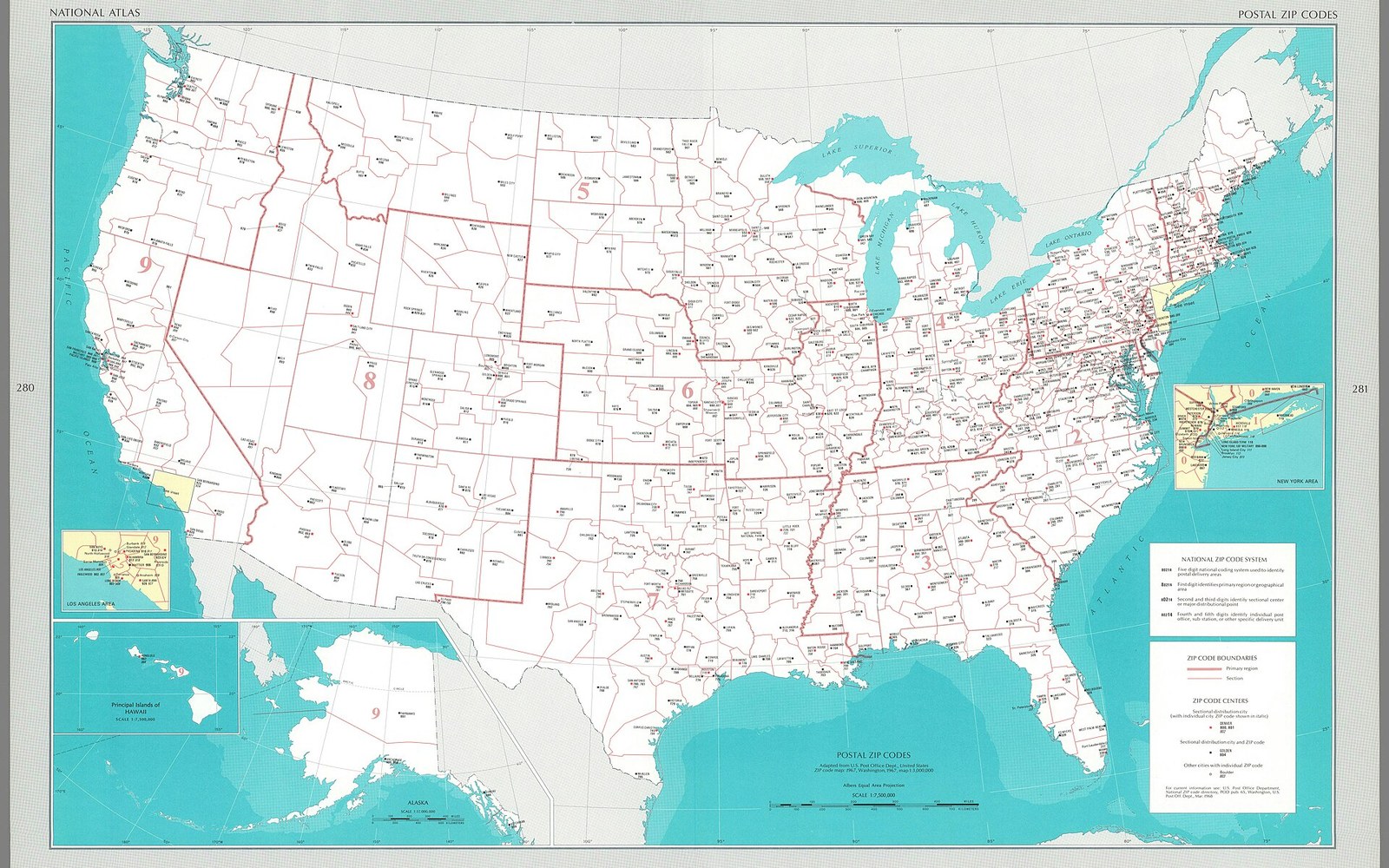
Five digits, and a mailing list could be sorted, aggregated and matched against the census.Photo: Postal zip codes - adapted from U. S. Post Office Dept., United States ZIP code map- 1967, Washington, 1967, map 1-3,000,000. (IA dr postal-zip-codes-adapted-from-u-s-post-office-dept-united-states-zip-14359211) · Wikimedia Commons
- The ZIP Code Made a List a MapLists & SegmentsThe Zone Improvement Plan code, introduced in 1963, gave every postal address a five-digit number that could be sorted, aggregated and matched to census data — the moment a mailing list became a geographic instrument.
- Four More Digits, 1983Lists & SegmentsZIP+4 added a four-digit suffix to the 1963 code, resolving addresses to a block face or a building — what the added precision gave to segmentation, and why adoption by mailers was slower than the Postal Service had expected.
- Claritas Divided the Country into Forty ClustersLists & SegmentsJonathan Robbin's PRIZM system, launched by Claritas in 1974, attached lifestyle-cluster labels to ZIP codes using census data — 'Young Influentials', 'Blue Blood Estates' and thirty-eight other segments that a mailer could buy.
- Three Numbers That Ranked a CustomerLists & SegmentsRFM — recency, frequency and monetary value — the scoring system Robert Kestnbaum formalised for ranking a house file by the likelihood of response.
- The Merge-Purge ProblemLists & SegmentsWhen a mailer rented multiple lists for a single campaign, the same name appeared on several of them — the merge-purge operation deduplicated the combined file and, in doing so, revealed how much overlap the list industry was selling.
- What the Warehouse HeldLists & SegmentsAcxiom, Experian and the data-warehouse business that grew from list-broking into comprehensive consumer dossiers — the scale of what was assembled, the sources it was drawn from, and how the industry described its product.
Elsewhere on the ledger