Section 2 of 7
Rural Routes
Rural Free Delivery, Parcel Post and the infrastructure that carried the catalogue into farmhouses no shop could reach.
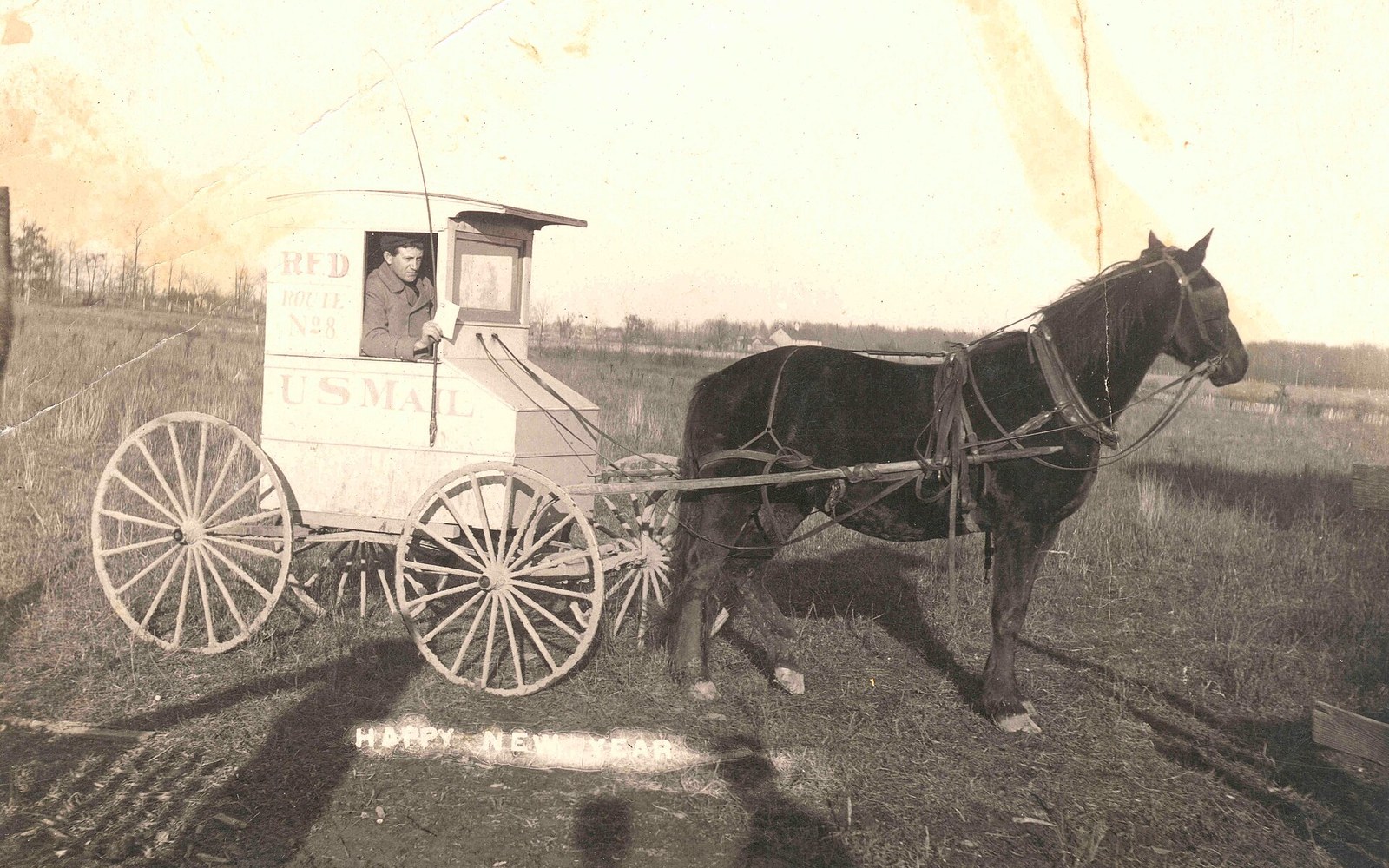
An RFD carrier worked a fixed route six days a week, which is what made a 500-page book a practical thing to send.Photo: Photograph of rural carrier with horse and wagon · Wikimedia Commons
- Forty Years of Getting a Book to a FarmhouseRural RoutesRural Free Delivery, launched by the United States Post Office in 1896 — the political fight to fund it, the routes it established, and what it meant for a farmhouse that had previously collected its own mail from a distant post office.
- Parcel Post Opened the Package, 1913Rural RoutesThe Parcel Post Act of 1913 allowed the mail to carry goods, not just letters — the immediate effect on Sears and Ward order volumes, and the opposition from local merchants who understood exactly what it meant.
- A House, Posted in PiecesRural RoutesSears Modern Homes sold approximately 70,000 kit houses between 1908 and 1940 — the catalogue page, the numbered lumber, the financing and the adults who assembled them on site.
- When the Van Replaced the WagonRural RoutesThe transition from horse-drawn rural carrier routes to motor vehicles in the early twentieth century — what the change meant for delivery frequency, package capacity and the economics of rural mail order.
Elsewhere on the ledger