Rural Routes
A House, Posted in Pieces
Sears Modern Homes sold approximately 70,000 kit houses between 1908 and 1940 — the catalogue page, the numbered lumber, the financing and the adults who assembled them on site.
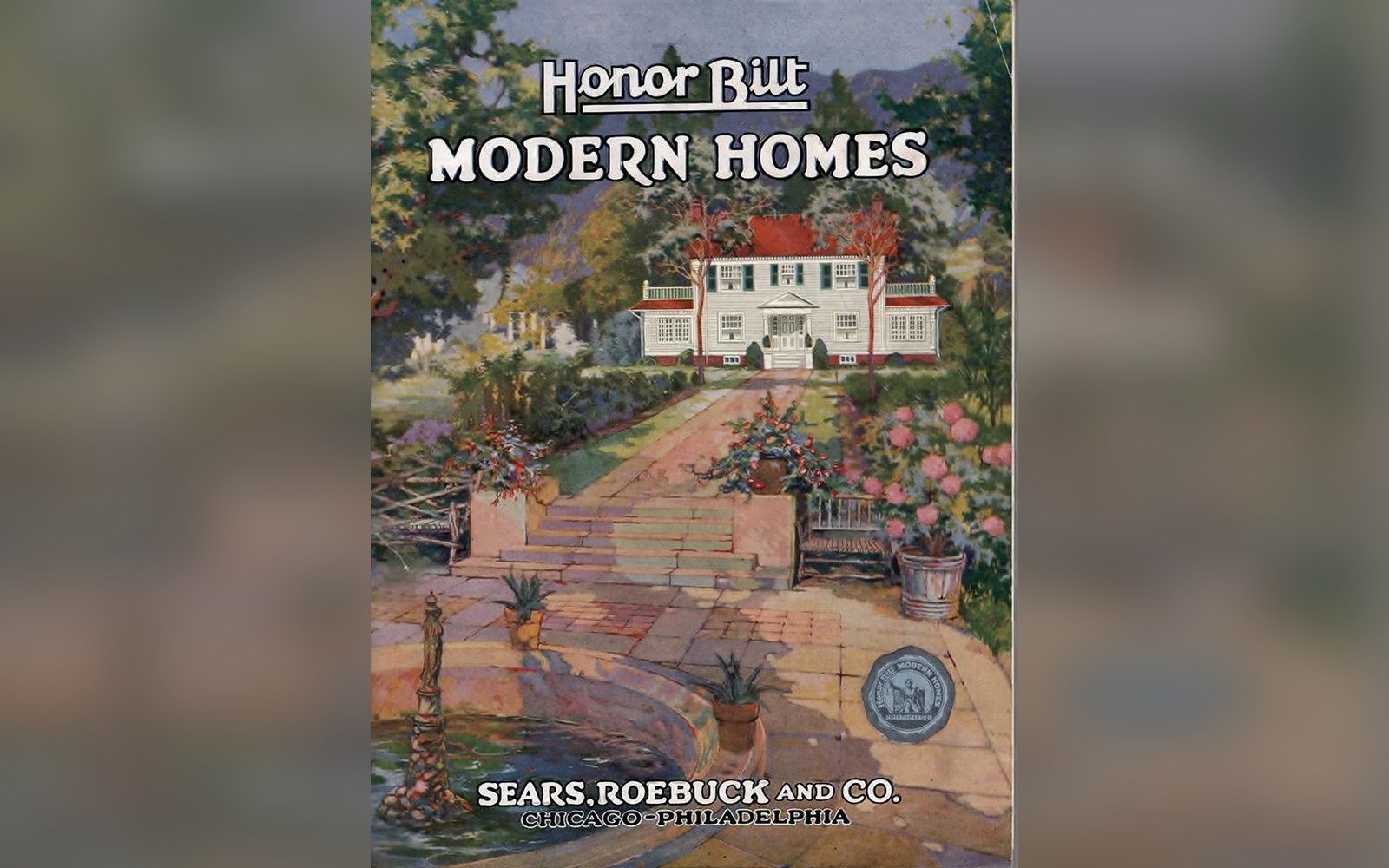
About 70,000 kit houses left the catalogue between 1908 and 1940: numbered lumber, a plan and a freight car.Photo: 1922 Sears Modern Homes Catalog · Wikimedia Commons
The mail-order model reaches its most ambitious extension: a complete home, shipped by rail in numbered components
From Catalogue Page to Foundation
In 1908, Sears, Roebuck and Company added a category to its offer that stretched the logic of mail-order commerce to its furthest point: a complete house, sold from a printed page, paid for on an instalment plan, and shipped by rail as a set of pre-cut, numbered lumber components ready for assembly on a prepared foundation. The programme, marketed under the name Sears Modern Homes, would run until 1940 and account for approximately 70,000 kit houses ↗ delivered across the United States.
The offer rested on the same mechanisms that had made the Sears, Roebuck catalogue a rural institution since the 1880s. A customer consulted a dedicated homes catalogue — eventually running to more than a hundred designs — selected a model, submitted an order, and arranged financing through Sears's own credit operation. The company extended mortgage lending directly to buyers, a step beyond the instalment plan arrangements used for smaller goods, and one that made the programme accessible to households that could not meet the full purchase price in advance.
Lumber as a Numbered List

Rural Free Delivery, 1896: the box at the end of the road replaced the trip into town, and the catalogue came to the porch.
Photo: Tolga Ahmetler / Pexels
The physical execution was genuinely novel. Sears operated its own lumber mills and produced pre-cut components machined to tolerance, each piece stamped with a number corresponding to an assembly guide shipped alongside the order. A standard kit for a modest two-storey model arrived in one or two rail freight cars and included framing lumber, lath, shingles, millwork, windows, doors, paint, and hardware — in some configurations, as many as 30,000 individual parts. The assembly guide was written for skilled tradespeople rather than untrained homeowners; most buyers engaged local carpenters and contractors. The savings compared with conventional construction were real: Sears estimated, at various points in the programme's life, that pre-cutting and factory milling reduced on-site waste and labour time substantially, though the exact figure varied by model and local labour cost.
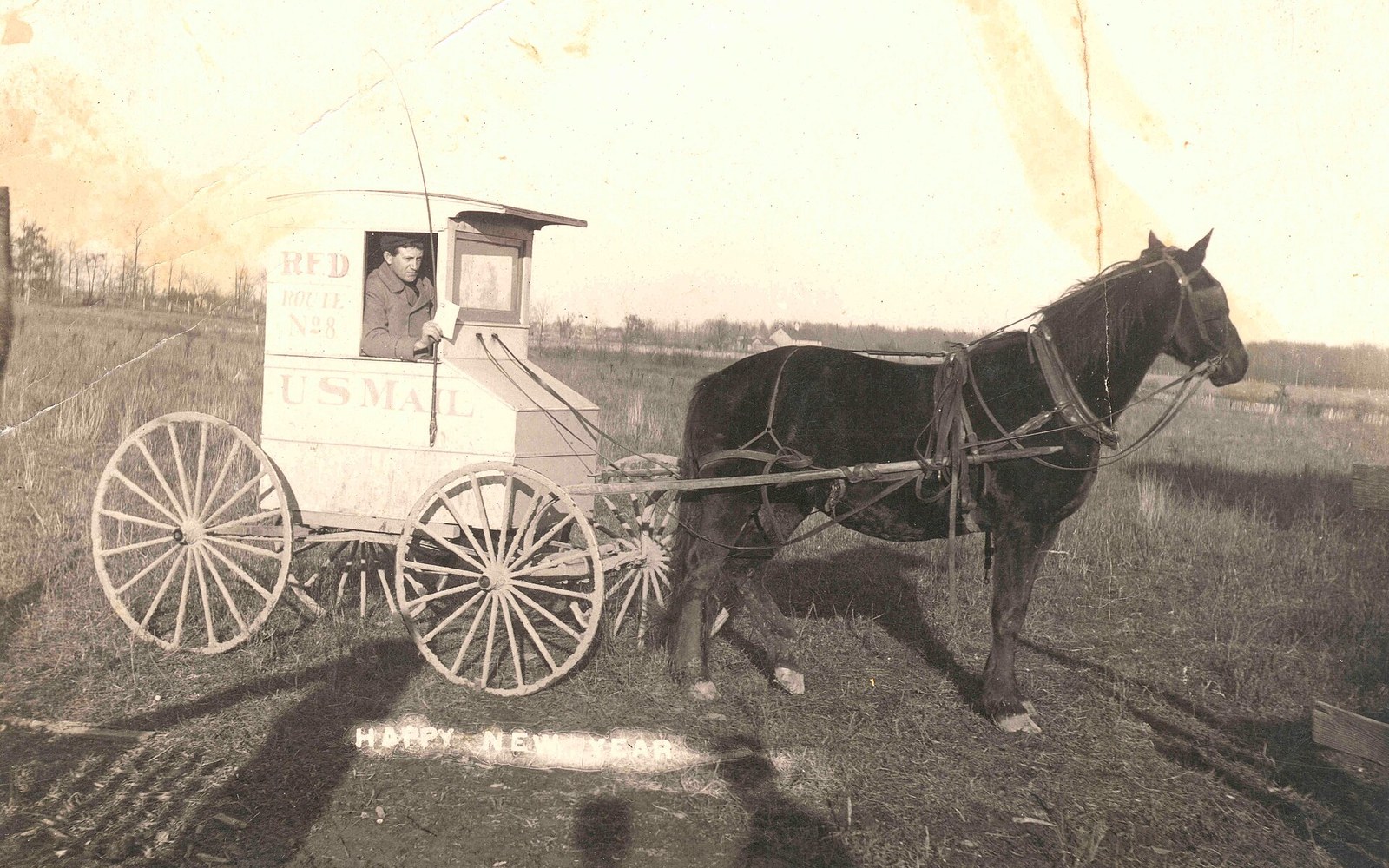
An RFD carrier worked a fixed route six days a week, which is what made a 500-page book a practical thing to send.
Photo: Photograph of rural carrier with horse and wagon · Wikimedia Commons
Designs ranged from the minimal — simple four-room bungalows aimed at working-class buyers — to elaborately detailed Colonial Revival and Craftsman-style homes with built-in cabinetry, decorative millwork, and multiple bathrooms. The catalogue presented floor plans, exterior elevations, and room dimensions with the same matter-of-fact clarity applied to farm tools and clothing. Price and specification occupied the same page.
What the Programme Measured
The Sears Modern Homes operation was direct marketing in the strictest sense: every sale began with a catalogue response, every transaction was recorded, and the house file of past buyers was a known asset. The company tracked which designs sold in which regions, adjusted the catalogue accordingly, and retired underperforming models. The geographic distribution of surviving homes — documented by researchers in states from New Jersey to Illinois to the Pacific Northwest — confirms that the programme reached well beyond the urban centres its competitors typically served, a reach made possible by the Rural Free Delivery network and the rail freight infrastructure that served the same dispersed population the mail-order catalogue had always targeted.
The programme wound down as the Depression reduced construction activity and tightened the credit conditions under which Sears had been lending. By the time the last kits were delivered in 1940, the mortgage portfolio had become a liability; Sears eventually sold its home-lending book to avoid the sustained exposure of holding long-term real-estate debt.
What the programme demonstrated was the extreme elasticity of the mail-order model: given sufficient logistics infrastructure, a reliable credit mechanism, and a catalogue detailed enough to substitute for physical inspection, almost any standardised, shippable product could be sold by post. A house was merely the largest thing that had ever been numbered, packaged, and sent.