Rural Routes
Forty Years of Getting a Book to a Farmhouse
Rural Free Delivery, launched by the United States Post Office in 1896 — the political fight to fund it, the routes it established, and what it meant for a farmhouse that had previously collected its own mail from a distant post office.
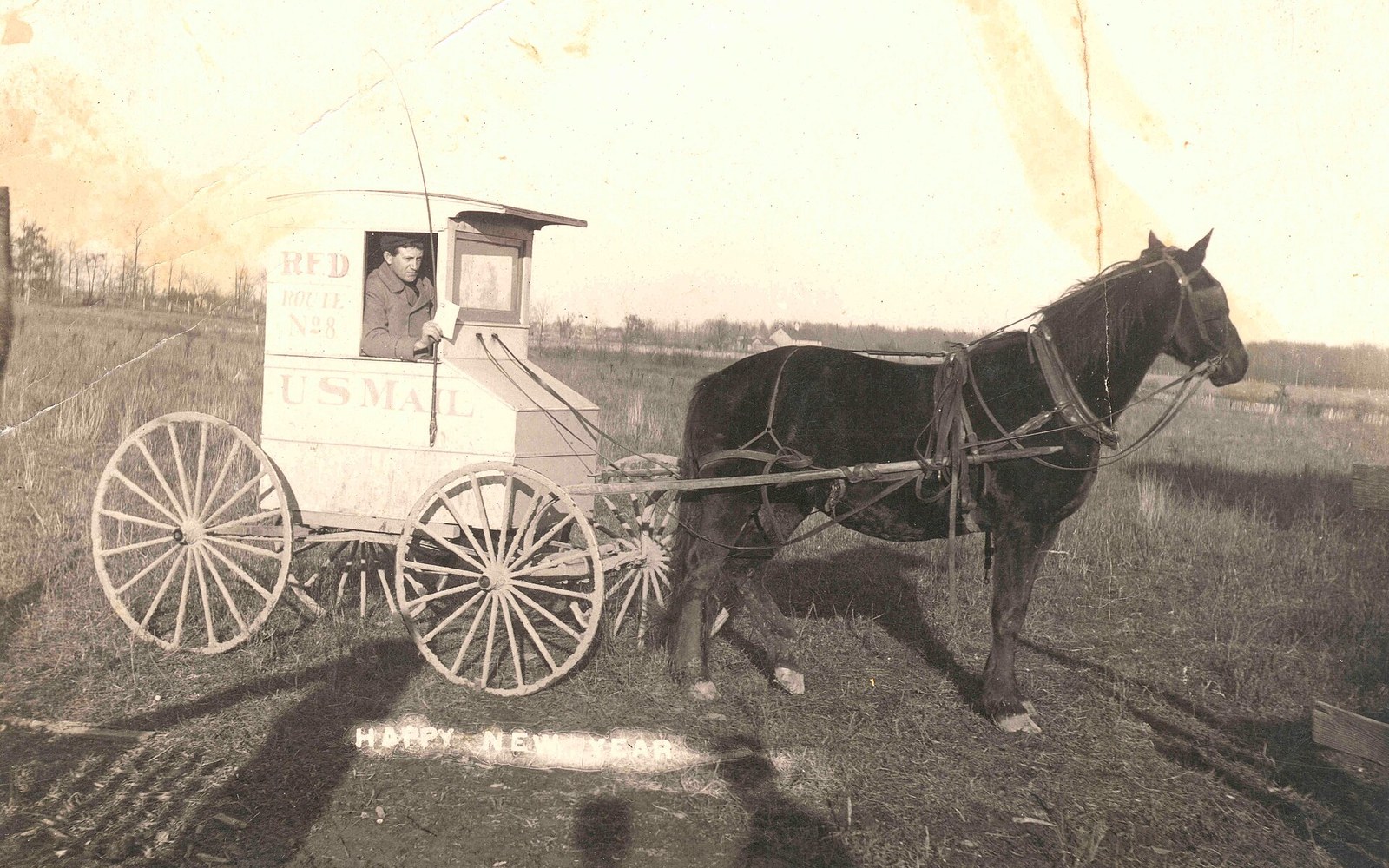
An RFD carrier worked a fixed route six days a week, which is what made a 500-page book a practical thing to send.Photo: Photograph of rural carrier with horse and wagon · Wikimedia Commons
How Rural Free Delivery turned scattered farmhouses into a national mail-order market — and why that market waited a generation to arrive
The Distance Between a Farm and a Post Office
Before 1896, a farmer in Conway, Arkansas or the outlying counties of Illinois did not receive mail at his door. He collected it — riding or walking to the nearest post office, which might stand four, six, or eight miles away, open on hours that bore no reliable relation to weather or harvest. The letter and the catalogue arrived on the same terms as any other errand: at personal cost, in personal time. That friction was not merely inconvenience; it was the structural barrier that kept rural households out of the mail-order economy even as that economy was being built, in Chicago and New York City, expressly for them.
Aaron Montgomery Ward had printed his single-page catalogue in 1872, aimed explicitly at Grange members and rural buyers who distrusted the local merchant's prices. Richard Warren Sears and Alvah Curtis Roebuck would push the same argument further and louder across the following decade. The pitch was price, selection, and the money-back guarantee. But the pitch assumed a postal system that reached the buyer — and for a generation, that system simply did not. Farmers could order by post, but collecting and returning goods still required the trip to town that catalogue shopping was supposed to eliminate.
The Political Fight to Fund the Last Mile
Rural Free Delivery had been an aspiration in Washington for years before it became policy. Rural members of Congress pressed the argument in terms of equity: city residents received home delivery; why should a farm family pay, in time and labour, what an urban resident received as a standard service? Postmaster General John Wanamaker — himself a department-store pioneer with his own interest in postal commerce — advocated for rural delivery in the late 1880s and early 1890s, but Congress resisted the cost.
The appropriation finally came in stages. Congress funded an experimental programme in 1896, authorising a modest allocation for test routes in several states, and the Post Office Department ran its first routes in West Virginia in October of that year. Results were measured in public petitions, route miles, and — critically — in postage revenue, because a route that generated sufficient letter and parcel traffic could argue its own economic case. By 1902 the programme was permanent. By 1906 there were more than forty thousand rural routes operating across the country, and the carrier — initially travelling by horse and wagon — was appearing at farmhouse mailboxes on a dependable daily schedule.
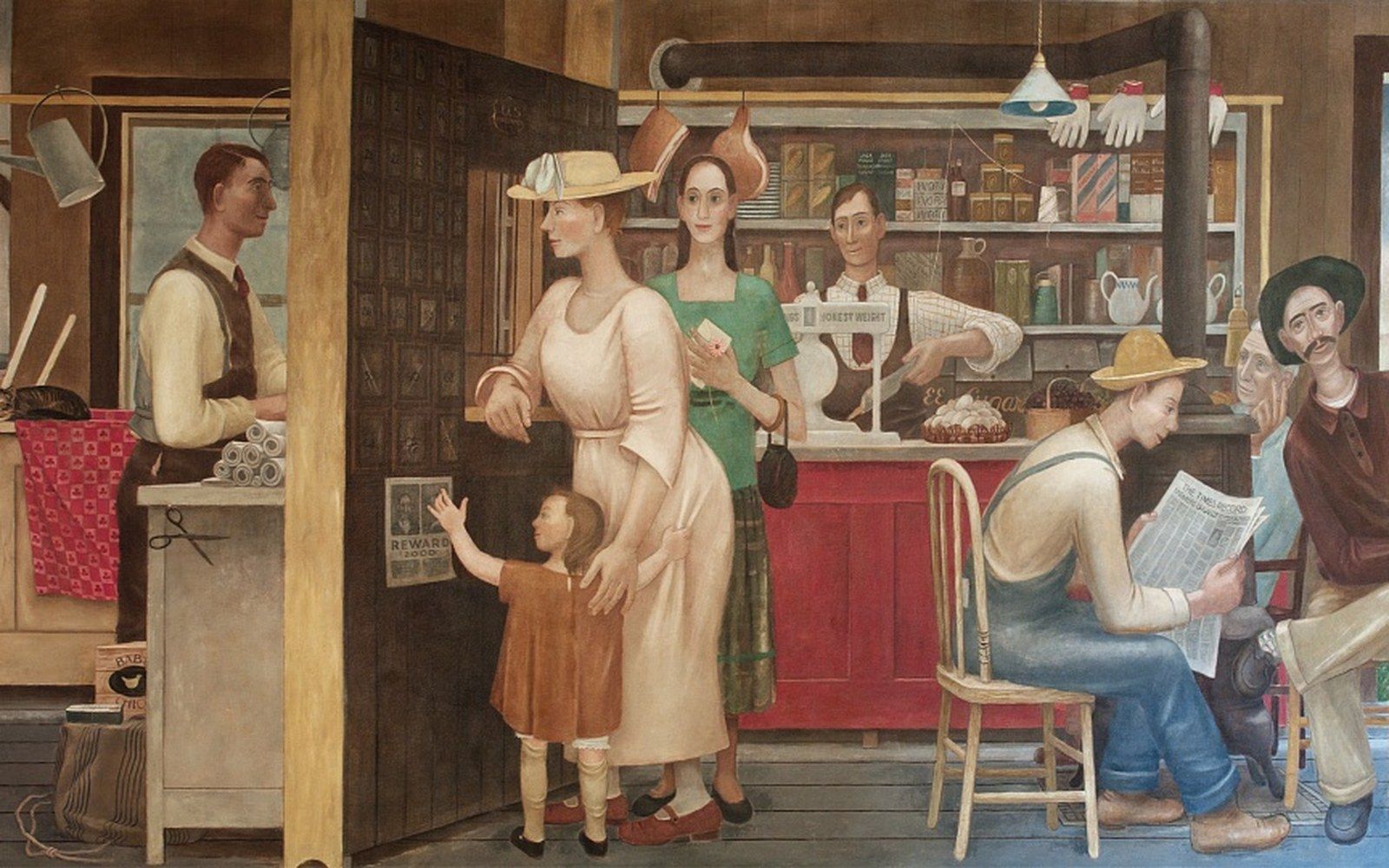
After 1913 the mail carried goods, and the counter at a rural post office became a depot.
Photo: General store and post office 24943v · Wikimedia Commons
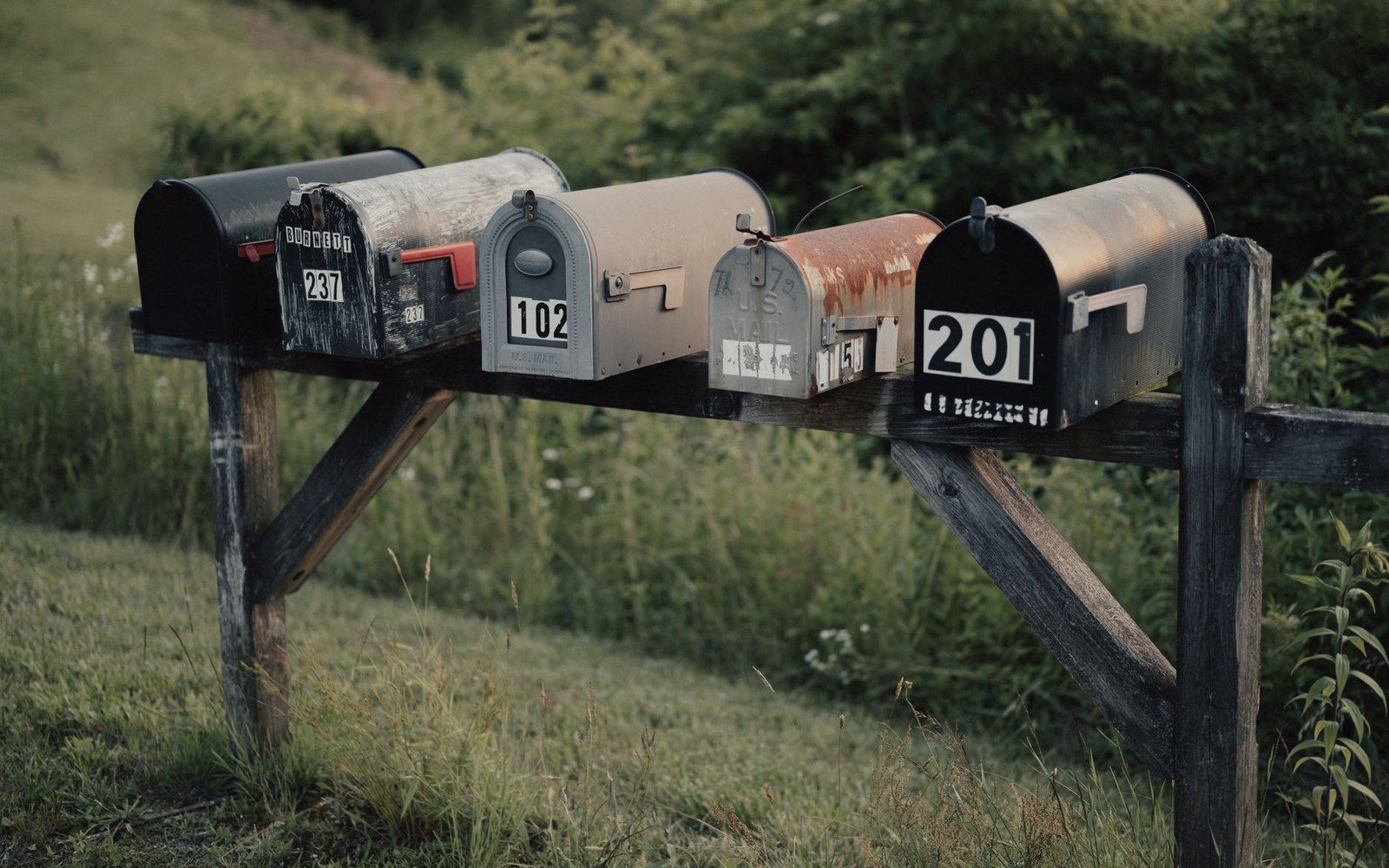
Rural Free Delivery, 1896: the box at the end of the road replaced the trip into town, and the catalogue came to the porch.
Photo: Tolga Ahmetler / Pexels
The Parcel Post Act of 1913 extended the logic: having built the delivery infrastructure, Congress allowed that infrastructure to carry packages. The two legislative acts belong together in the history of direct marketing. Rural Free Delivery was the road; Parcel Post was the load the road could bear.
What Arrived at the Mailbox
The practical consequences at the farmhouse level were immediate and cumulative. A woman in rural Georgia who had previously waited for a trip to town now received a catalogue from Sears, Roebuck and Company — hundreds of pages of goods, prices, and order forms — directly at her door. Returning an order was simpler: payment could be handed to the carrier, and after 1913 parcels could travel back on the same route. The frictionless round-trip that catalogue merchants had promised in their copy now actually existed.
Sears, Roebuck's catalogue had reached five hundred pages by 1897, a volume that made physical sense only if the customer had time to consult it at home rather than at a counter. The rural carrier made that consultation possible. Montgomery Ward's list brokers and sales copywriters had been building mailing lists and writing response-oriented prose for a buyer who, before 1896, could not always be reached. Now they could. The mailing list — the foundational tool of direct marketing — became a document that matched names and addresses to a postal infrastructure capable of serving them.
The volume of mail on rural routes grew rapidly. Catalogue companies tracked it; the Post Office measured it. The data that would eventually be formalised as response rates and cost-per-order calculations began, in this period, as the simplest kind of evidence: how many envelopes came back, and from which routes? Jonathan Robbin's PRIZM cluster system lay seventy-eight years in the future, but the principle — that geography predicts purchasing behaviour — was being demonstrated empirically on every rural carrier route from the late 1890s onward.
Infrastructure as Market-Maker
The forty-year gap referenced in this article's title is real and specific. Ward printed his sheet in 1872. Rural Free Delivery reached meaningful national coverage around 1906 and became fully integrated with parcel delivery from 1913. The mail-order market that catalogue pioneers imagined took roughly four decades to acquire the infrastructure it required. The market did not create the infrastructure; the infrastructure created the market's effective reach.
This is a pattern that recurs in direct marketing history. AT&T's 800-number service in 1967 preceded the mass adoption of direct-response television by years, until the toll-free number's value became self-evident to broadcast advertisers. Lou Montulli's HTTP cookie at Netscape in 1994 similarly preceded the e-commerce infrastructure that would make behavioural targeting commercially central. In each case, the enabling technology or system arrives, establishes itself through gradual adoption, and is then retrospectively credited as the foundation of a practice that came later.
Rural Free Delivery's specific contribution to direct marketing was structural in three senses. It created a reliable, daily, carrier-served connection between the cataloguer's warehouse and the rural buyer's home. It generated, through postal records and carrier route data, the earliest systematic geography of mail-order demand. And it did what every piece of enabling infrastructure must do before a market can function: it removed the cost of the last mile ↗ from the buyer and placed it on the system, making the transaction symmetrical in a way it had never been before.
Leon Leonwood Bean, who founded his Freeport, Maine, operation in 1912, built his catalogue on this infrastructure as a matter of practical fact. The boot that ninety of his first hundred buyers returned came back through the mail; its replacement went out the same way. The guarantee was meaningless without the route that made the exchange possible. Every name on every rented mailing list in the century that followed traces part of its commercial logic to the carrier who turned up, daily, at the farmhouse door.