Rural Routes
Parcel Post Opened the Package, 1913
The Parcel Post Act of 1913 allowed the mail to carry goods, not just letters — the immediate effect on Sears and Ward order volumes, and the opposition from local merchants who understood exactly what it meant.
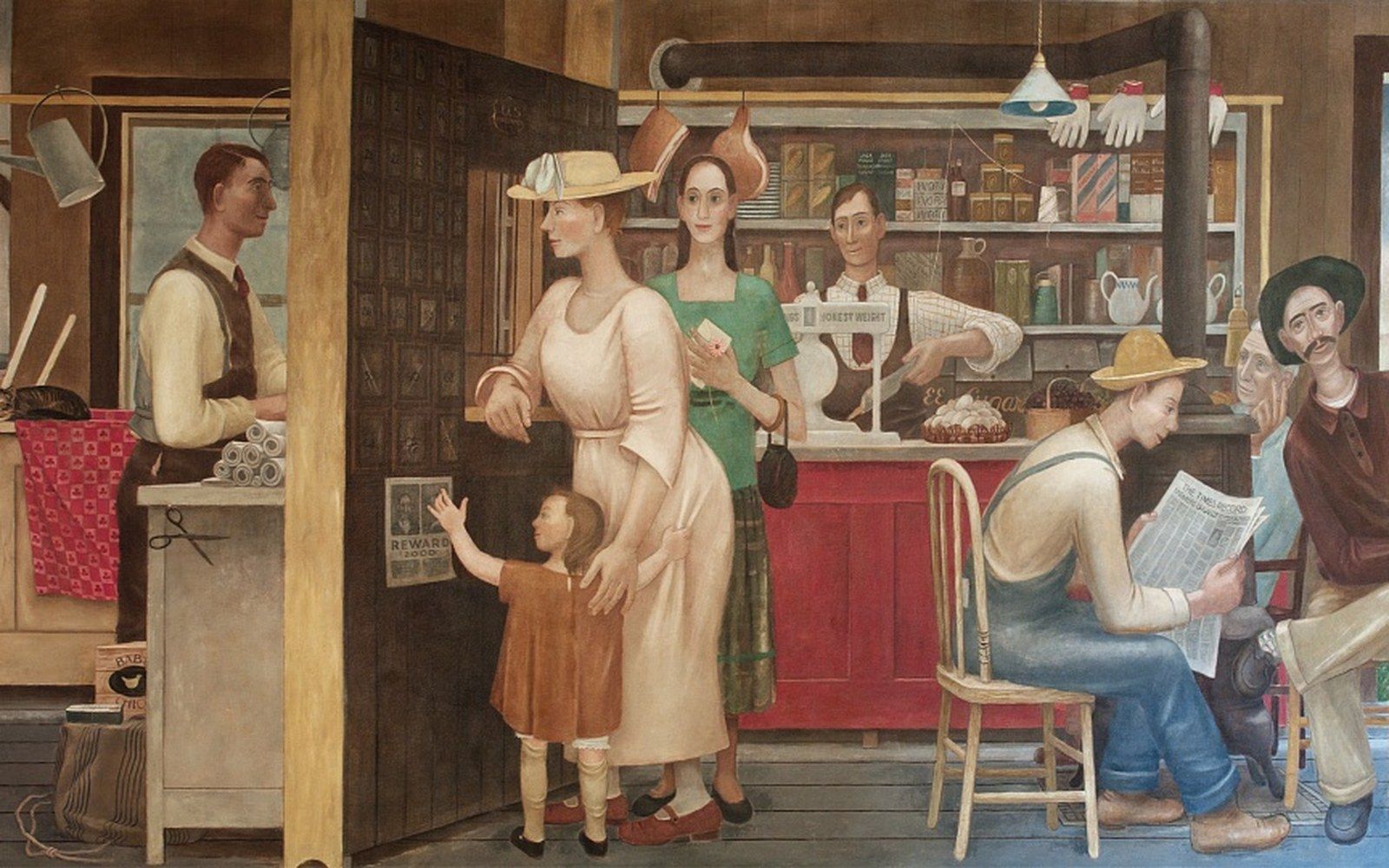
After 1913 the mail carried goods, and the counter at a rural post office became a depot.Photo: General store and post office 24943v · Wikimedia Commons
A single act of Congress turned the mail system into a delivery network — and the local general store into a losing proposition.
The Problem the Post Office Did Not Solve
For four decades after Aaron Montgomery Ward mailed his first price list in 1872, the United States postal system carried words but not things. Letters, newspapers, magazines — yes. A pair of boots, a stove lid, a parcel of dry goods — no. The practical effect was a structural limitation on mail-order commerce: even a customer who had found a catalogue, selected a product, and sent a money order still had to wait for freight shipment by private express company, which added cost, delay, and a second point of failure to every transaction. Ward and Sears, Roebuck and Company had built substantial businesses against this constraint, but the constraint was real. Rural Free Delivery, launched in 1896, had brought the catalogue to the farmhouse door; it could not yet bring the merchandise back.

Rural Free Delivery, 1896: the box at the end of the road replaced the trip into town, and the catalogue came to the porch.
Photo: Tolga Ahmetler / Pexels
The Parcel Post Act, signed into law by President William Howard Taft on 24 August 1912 and effective 1 January 1913, changed the terms entirely. The legislation authorised the United States Post Office to accept and deliver packages — initially up to eleven pounds, later expanded — through the same carrier network that already reached every rural route in the country. For the first time, a single governmental infrastructure could complete the entire circuit from printed offer to delivered good.
January 1913 and What Followed
The commercial response was immediate. Sears, Roebuck and Montgomery Ward had spent years conditioning rural customers to order by mail; what they lacked was a low-cost, reliable last-mile carrier. Parcel Post supplied one overnight. Reports from the period document ↗ a surge in catalogue order volume within weeks of the service opening, as customers who had previously deferred orders — or paid express premiums — began to use the post office as a matter of routine. The postal service itself processed millions of parcels in the first months; the Smithsonian Institution's National Postal Museum has documented the sheer operational scale of that initial period, with post offices in rural districts handling volumes for which they had not been provisioned.
Leon Leonwood Bean, who had launched his Maine Hunting Shoe by direct mail only the previous year out of Freeport, Maine, was among the early beneficiaries. A single-man operation dependent on shipping individual pairs of boots could not have functioned at scale under the private express rates that predated 1913; Parcel Post made the economics workable.
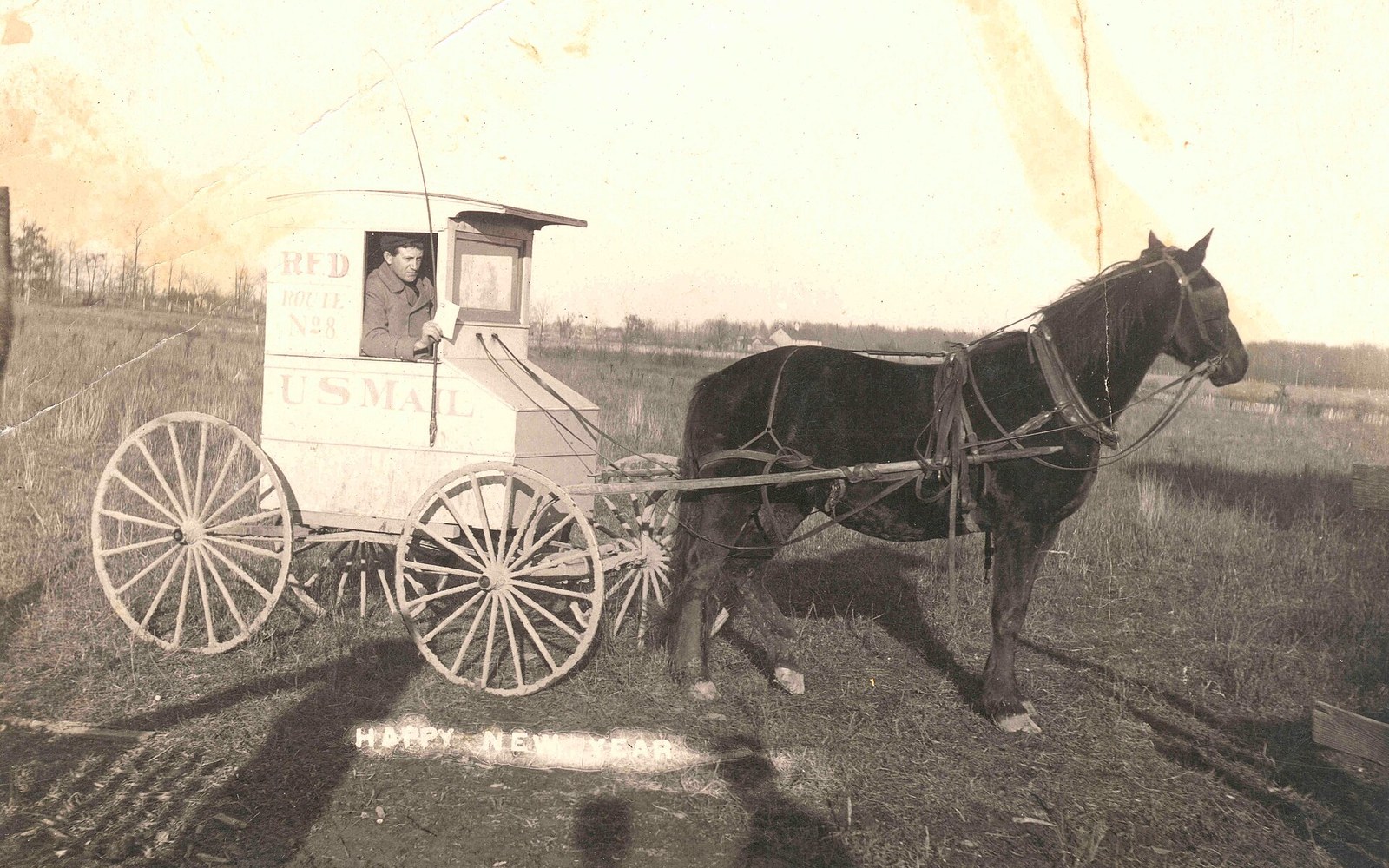
An RFD carrier worked a fixed route six days a week, which is what made a 500-page book a practical thing to send.
Photo: Photograph of rural carrier with horse and wagon · Wikimedia Commons
The opposition was not silent, and it was not disorganised. Retail merchants — particularly the general-store operators who served small towns and farming communities — understood precisely what the legislation portended. Their lobby against Parcel Post was vigorous and extended, centred on the argument that low-cost package delivery would allow Chicago-based mail-order houses to undercut local merchants on price while escaping local tax obligations. The argument was accurate as a prediction. James H. Shideler's historical account ↗ and other period analyses note that rural merchant associations circulated literature warning communities of the consequences, framing catalogue buying as a form of economic disloyalty. Some towns organised catalogue burnings. None of it altered the trajectory.
The Infrastructure That Made the Catalogue Real
What Parcel Post accomplished was the completion of a system whose other components already existed. The ZIP Code and the data-warehouse era lay decades in the future, but the functional skeleton of a national direct-delivery commerce network — a printed offer, a list of customers, a payment mechanism, a postal carrier — was now intact. Montgomery Ward's 1872 promise that goods could travel from a Chicago warehouse to a rural buyer had always depended, in the end, on the postal infrastructure catching up to the commercial idea. The Parcel Post Act was the moment it did.
The local merchants were right that they faced an existential challenge, and the catalogue houses did not waste the advantage. Order volumes at Sears and Ward grew substantially through the 1910s and into the 1920s; the rural customer, already accustomed to the catalogue as a browsing object, now had a frictionless mechanism for receiving what she ordered. The post office had become, without quite intending it, the logistics arm of a national retail revolution.