Rural Routes
When the Van Replaced the Wagon
The transition from horse-drawn rural carrier routes to motor vehicles in the early twentieth century — what the change meant for delivery frequency, package capacity and the economics of rural mail order.
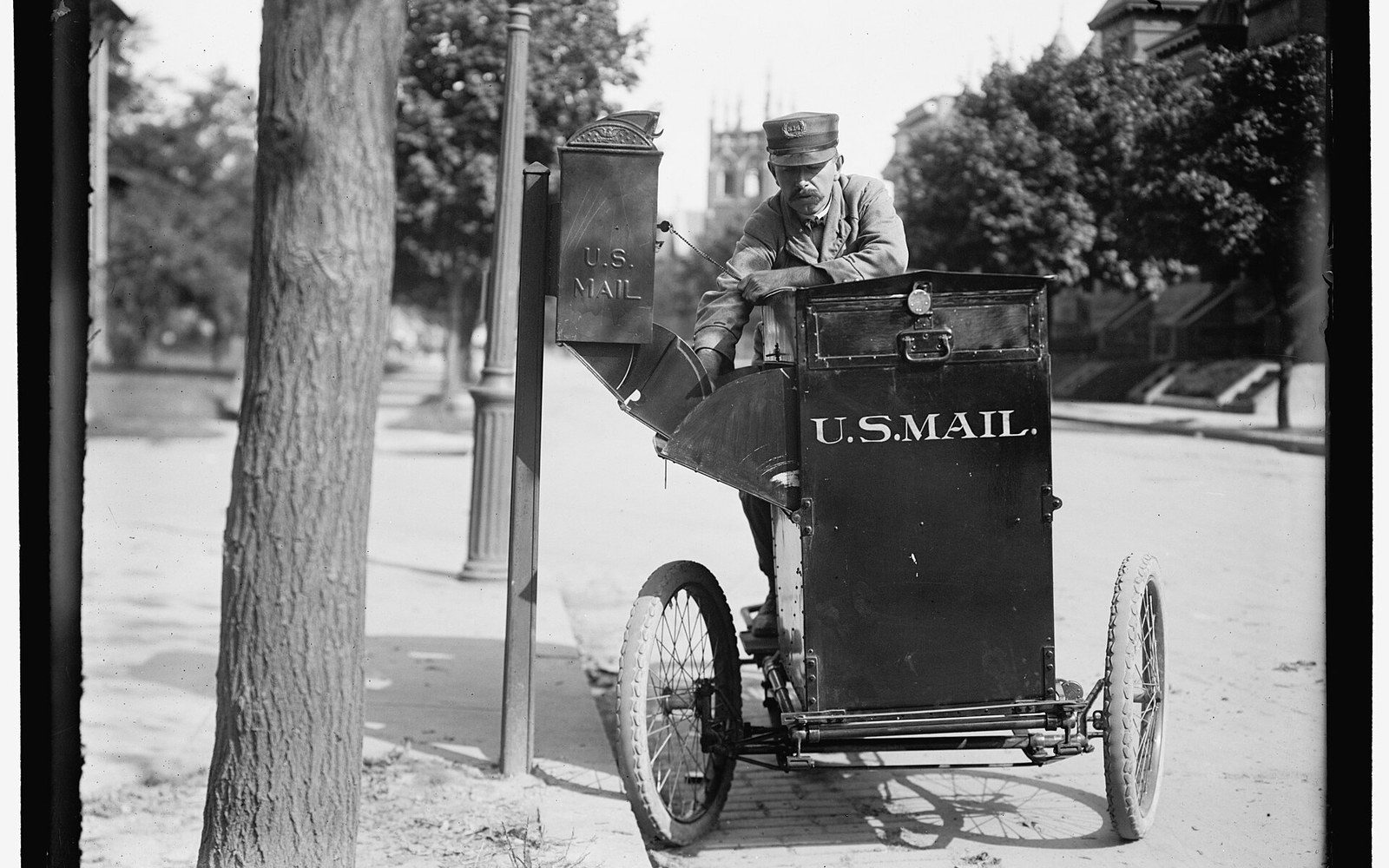
Motor routes raised both delivery frequency and package capacity; the wagon had set the ceiling before them.Photo: POST OFFICE DEPARTMENT. MOTOR CYCLE POSTMAN LCCN2016864000 · Wikimedia Commons
Iron Wheels to Pneumatic Tyres on the Rural Route
Before the motor vehicle reached the rural post road, delivery by horse and wagon was a study in constraint. A carrier managing one of the routes established after Rural Free Delivery launched in 1896 could cover, on average, somewhere between twenty and twenty-five miles in a working day — and that figure held only in fair weather on passable roads. Mud season in the upper Midwest and mountain counties of the South rendered whole route segments inaccessible for weeks at a time. A farmer waiting on a parcel from the Sears, Roebuck catalogue accepted, as a matter of plain fact, that delivery dates were suggestions at best.
The package itself faced a second constraint. A horse-drawn rural carrier wagon was a light rig, and the weight a carrier could manage without overloading a single animal was tightly limited. The Parcel Post Act of 1912, in effect from January 1913, authorised the postal system to carry heavier packaged goods — a legislative milestone — but the rural wagon that received those parcels was not built for the volume the new class of mail could theoretically generate. Boxes arrived at post offices; their onward movement depended entirely on what a horse could haul.
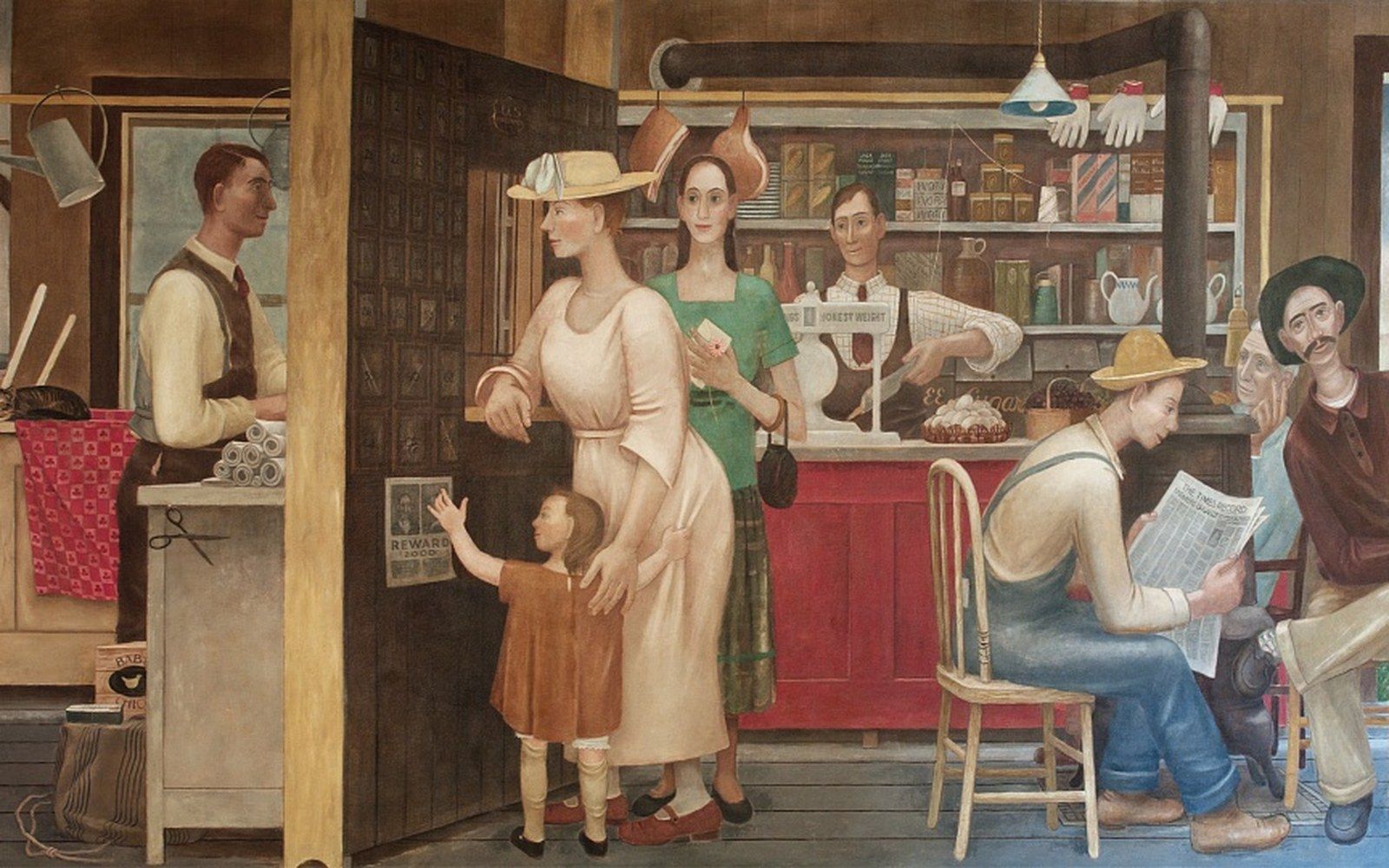
After 1913 the mail carried goods, and the counter at a rural post office became a depot.
Photo: General store and post office 24943v · Wikimedia Commons

Rural Free Delivery, 1896: the box at the end of the road replaced the trip into town, and the catalogue came to the porch.
Photo: Tolga Ahmetler / Pexels
The Post Office Department began authorising motor vehicle substitutions on rural routes around 1914, and the shift accelerated through the following decade as Ford Model T ↗ pricing brought mechanised transport within reach of carriers who supplied their own vehicles. A motorised carrier on a dirt road could travel forty or more miles per day under ordinary conditions. Route length expanded; individual routes were consolidated; the same number of carriers could serve more addresses. Load capacity increased substantially, since a truck bed or a van body is constrained by cubic volume and axle weight, not by an animal's endurance.
For rural mail-order commerce, the practical effect was compressing the gap between order placement and delivery, and reliably moving the bulkier goods — furniture components, agricultural tools, the pre-cut lumber packages of Sears Modern Homes — that a horse could not have managed without a second trip. Montgomery Ward and Sears had built their businesses on the promise that a rural household could order from a page and receive a package; motorisation was the infrastructure that made the back end of that promise consistently keepable.
The Good Roads Movement ↗, which had gained momentum partly through rural carriers' lobbying during the wagon era, accelerated road paving alongside vehicle adoption — the two systems reinforcing each other until the rural route, by mid-century, was not a marginal distribution channel but a reliable one.