The Coupon
Wunderman Named It at MIT, 1967
Lester Wunderman's 1967 speech at MIT, where he used 'direct marketing' as a term for a practice that had existed for decades without a shared name — the argument he made, the institutions he pointed to, and why the naming mattered to the trade.

The 1967 MIT speech gave a decades-old practice its shared name.Photo: Mehmet Turgut Kirkgoz / Pexels
The term 'direct marketing' had existed in practice for nearly a century before it acquired a name anyone could argue about.
A Word for What Already Existed
On 1 October 1967, Lester Wunderman took a lectern at the Massachusetts Institute of Technology and delivered a talk he called "Direct Marketing — The New Revolution in Selling." The occasion was a conference; the audience was professional. What Wunderman offered was not a new technique but a new category — a name that gathered into a single disciplinary phrase the mail-order catalogue, the Columbia Record Club coupon, the keyed advertisement, and the measurable response mechanism that each of them shared.
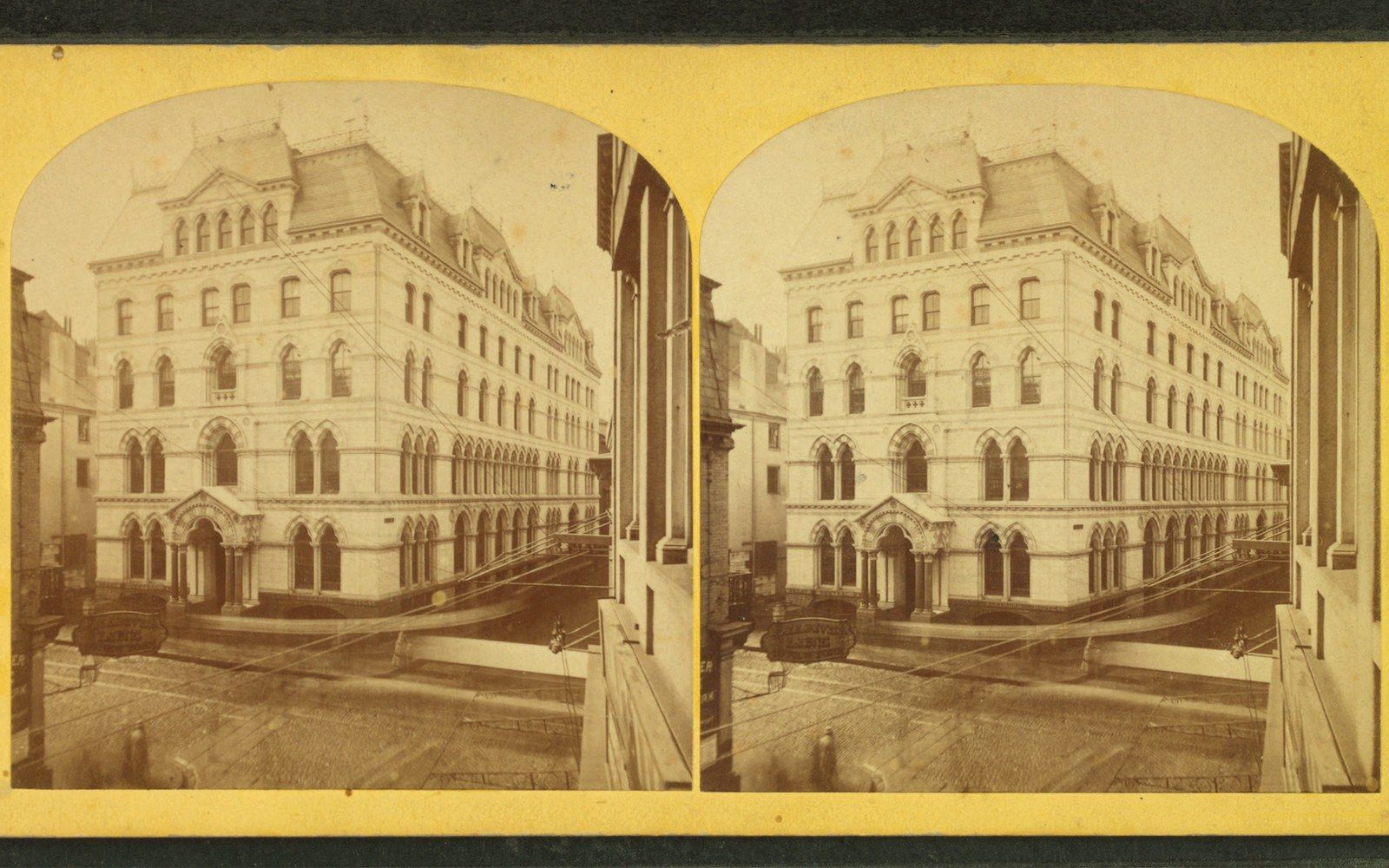
The Big Book at reading distance.
Photo: Sears building, from Robert N. Dennis collection of stereoscopic views · Wikimedia Commons
The practices he named were already old. Aaron Montgomery Ward had mailed his first circular in 1872. Richard Warren Sears had been shipping watches and then everything else since the late 1880s. Rural Free Delivery, launched in 1896, had carried the catalogues directly to farmhouses. The instalment plan had extended credit to buyers who could not pay at once. What none of this had, before Wunderman's speech, was a shared professional identity — a term that practitioners could place on a business card or argue about in a trade journal.

Hopkins, 1923: an advertisement that cannot be tested is an opinion.
Photo: RDNE Stock project / Pexels
Wunderman's argument was definitional in the technical sense. He distinguished direct marketing from general advertising by its insistence on a response mechanism: every piece, every spot, every page solicited a specific, trackable action from a specific, identifiable individual. The discipline was not about reach or impression; it was about transaction. The customer was not an audience member but a correspondent. The measure of success was not awareness but response.
He drew on institutions he had helped build. His work at the agency he founded — later Wunderman, Ricotta & Kline — had produced subscription architectures and keyed coupons that made the Columbia Record Club one of the most closely watched direct-marketing operations of the postwar period. AT&T's 800-number service, introduced the same year as his MIT speech, would shortly give the model a real-time response channel. The naming and the technology arrived nearly together.
The trade took the term. The Direct Mail Advertising Association, which had carried the older nomenclature since its founding in 1917, renamed itself ↗ the Direct Marketing Association in 1973, formally absorbing Wunderman's coinage into its institutional identity. That renaming signalled something practical: the discipline had outgrown the letter and the catalogue. It now included broadcast, telephone, and emerging data systems — anything that closed the loop between sender and named recipient and counted what came back ↗.
The MIT speech did not invent direct marketing. It made it legible to itself.