The Telephone
A Long Room Full of Scripts
The outbound telemarketing floor of the 1970s and 1980s — the physical space, the card deck, the script, the quota and the measurement of calls-to-sales.
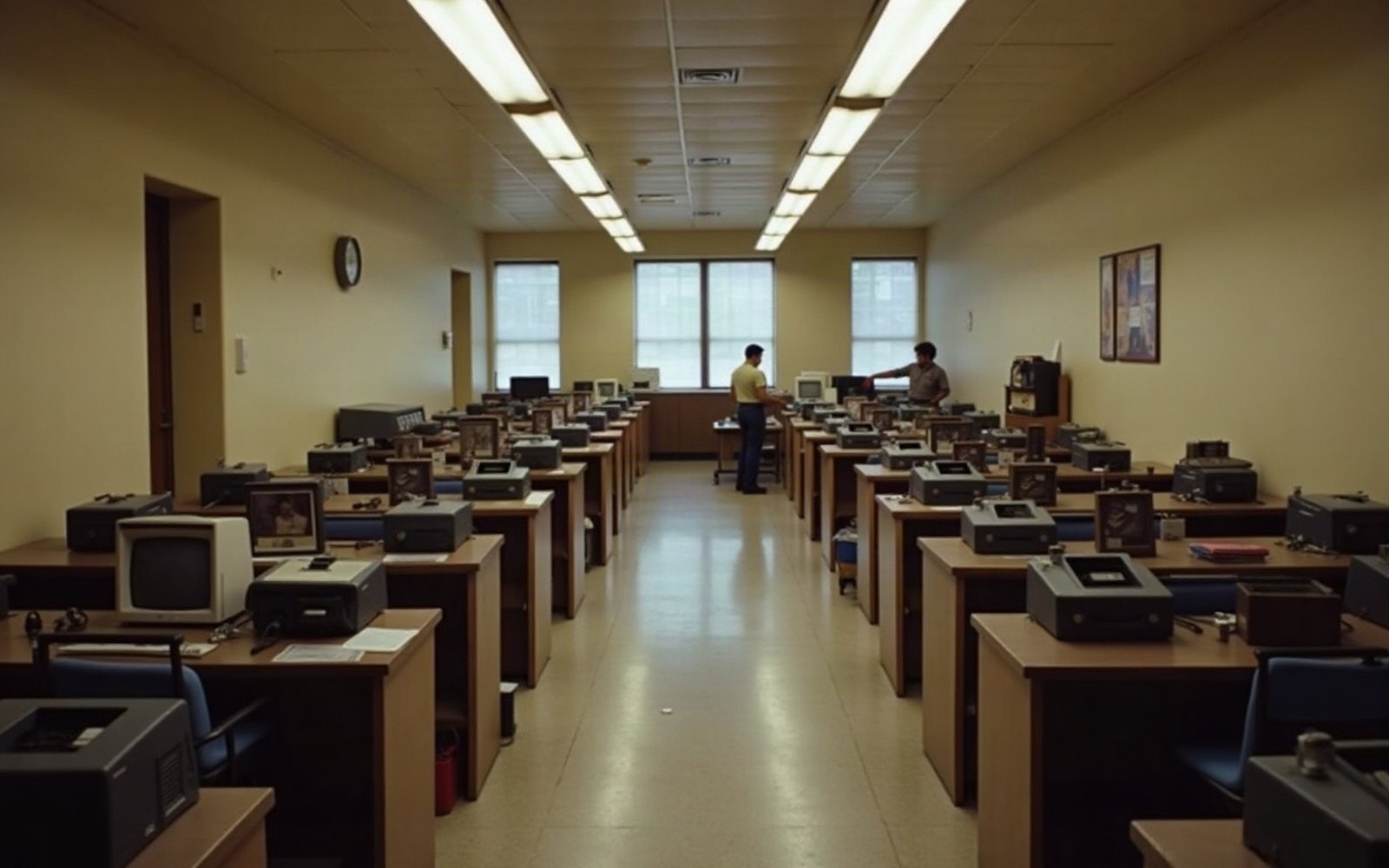
The floor ran on a card deck, a script and a quota, and was measured as calls to sales.
The outbound telemarketing floor at its peak was a measured environment — every call timed, every pitch scripted, every conversion logged against a quota set the morning before.
The Architecture of Response
The telemarketing floor of the 1970s and 1980s occupied a particular kind of space: long, low-ceilinged, fluorescent-lit, divided into rows of carrel stations separated by chest-high partitions. Each station held a telephone, an ashtray in the earlier years, and a card deck — a physical stack of index cards or, later, a dot-matrix printout carrying the call record for each prospect. Name, address, telephone number, any prior contact. The cards were worked in sequence. When a call ended, the card was annotated and moved: to a callback pile, a refusal pile, or the short stack marked sold.

Zones, 1963.
Photo: Marina Leonova / Pexels
Supervisors walked the floor with clipboards. The ratio they tracked was calls-to-sales, and it was posted at the end of each shift on a whiteboard visible to the entire room. Individual performance was not a private matter. The floor functioned as a piece of direct-marketing apparatus in the same sense as a mailing list: it was a scored, ranked instrument, and low-performing callers were managed out or retrained in the same way a poor-responding list segment was suppressed.
The Script as Control Mechanism
The script was the central technology of the floor. It was written not by the callers but by supervisors or, on larger operations, by dedicated copywriters applying the same logic Claude Hopkins had applied to print: identify the prospect's presumed need, state the offer precisely, remove the friction of refusal, close. Scripts were laminated or kept in binders, and callers were tested on them before their first live shift. Deviation was discouraged; some operations recorded calls and reviewed transcripts against the approved text.
The script also carried the objection tree — a branching set of responses to anticipated refusals. "We can't afford it" led to one branch; "We already have one" led to another. The structure codified every likely resistance and supplied a counter, keeping the caller on the approved path rather than improvising. This made the floor legible to management: a lost sale could be located in the script and either blamed on caller delivery or used as evidence that a branch needed revision.
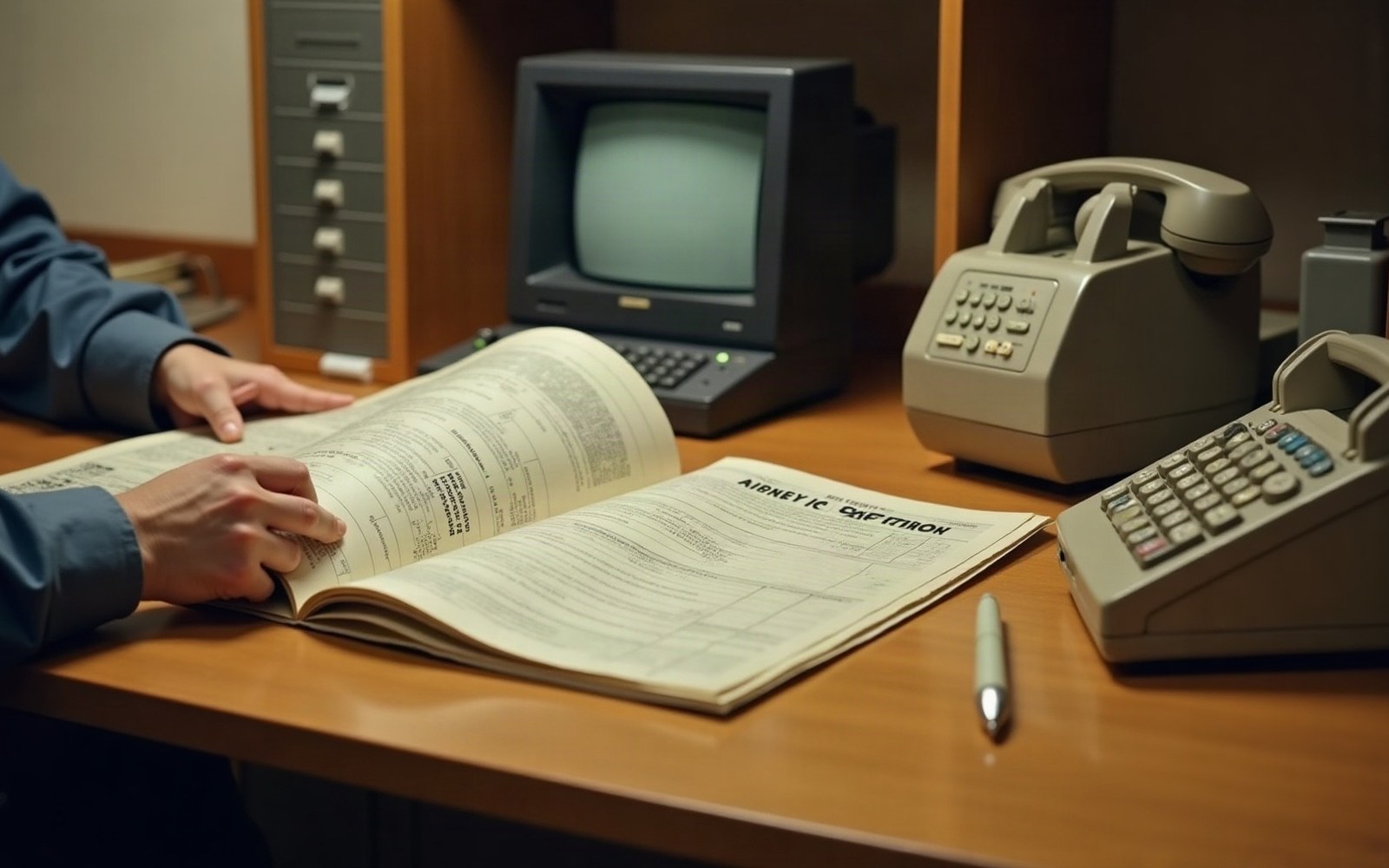
From 1967 the advertiser paid for the call, which is what made the telephone an order channel.
By the early 1980s, the industry had scaled considerably. AT&T's 800-number service, introduced commercially in 1967, had lowered the cost of inbound response, but outbound operations ran on ordinary direct-dialled lines, billed by the minute. Call duration was therefore a cost variable tracked alongside conversion rate. A script that ran too long eroded margin; one that moved too fast produced refusals. The floor managers who understood both variables were the ones who built sustainable operations.
Measurement and Its Limits
The Direct Mail Advertising Association, which broadened its scope and eventually changed its name to the Direct Marketing Association, recognised telephone marketing as a distinct discipline during this period, and the measurement frameworks it encouraged — calls attempted, contacts made, pitches completed, sales closed — mapped directly onto the response-rate metrics that had governed mail for decades. Robert Kestnbaum's RFM logic, built for list ranking, translated with only minor adjustment to the question of which telephone records to call first.
What measurement could not easily capture was caller fatigue and the cumulative effect of refusal on performance. Industry documentation from this era ↗ shows turnover rates on outbound floors that were high by any standard; the work was repetitive, the rejection rate was structural, and the quotas were unrelenting. The physical environment — the noise, the proximity of other callers' pitches, the whiteboard numbers — reinforced the pressure that the script was designed to contain.
The floor reached its regulatory limit when the National Do Not Call Registry opened in 2003, removing a substantial portion of the reachable consumer universe from outbound lists. The card deck and the objection tree survived into autodialler systems and eventually into offshore call centres, but the long room with its fluorescent light and its whiteboard quota belonged to a specific, bounded chapter of direct marketing's measurable history.